
Uncategorized
Without a rich heart…

Re-framing our current realities

All that a man achieves and all that he fails to achieve
is the direct result of his own
inner thoughts.
James Allen
Often we talk about doing things like starting a diet, getting a new mindset, overcoming an addiction; we fail to mention that it is much simpler to talk about a thing then to do a thing.
Smoking and paying bills
Let me try to give you a personal example. I am an ex-smoker. My Dad was a smoker and I picked it up initially when I was a teenager, but it didn’t stick. During my residency training, I started smoking again. It started during the particularly stressful part of my training, in the emergency room.
I can clearly remember the coordinator of the emergency room saying, “This will be the easiest rotation you ever have, you get half the month off.” Obviously there was a great deal of sarcasm buried in that statement. What he meant was that for 8 weeks we would work 12 hour shifts. Mid-month we would switch with the people on the opposite end of the shift. This meant that half of us would get a 24 hour respite and the other half would work a solid 24 hours. Guess which group I landed in?
I discovered that I enjoyed the rotation for the most part, but was very tired. I started drinking more coffee to stay “up” and focused. I also started smoking again. You could only pee on so many of your 5 minute breaks and if you go outside everyone standing by the hospital is smoking.
Eventually after training and children I was able to drop the habit again. Cold turkey didn’t work initially, so I tried some “aids.” Dismal failures, all. I smoked with the nicotine patch on my arm and I smoked with the nicotine gum in my mouth. And, amazingly cold turkey was the ultimate answer. I haven’t smoked in over 25 years and I have no intention of starting again. But, I recognize it for the addiction that it is.
But smoking isn’t what I really wanted to talk about……
Our minds become fixated by a particular set of circumstances and ideas and they are not easily dropped. Even though the reality of our situations change, that little cog of a memory does not.
I have noticed this in myself when I pay my bills. I grew up in a very poor family and didn’t have a lot of extra in college or in the early days of my career. I can vividly remember times when I was not able to pay bills and sweating over which bill to pay and which bill to skip.
But that is not the reality of my current situation. I am gainfully employed and always have a little extra in the bank. But I still dread paying bills. I still procrastinate and put it off as much as I can. When I sit down to do it, it takes less than 30 minutes and everything is more than adequately covered. But I have come to realize that buried somewhere deep within my psyche are the vestiges of poverty-stricken days, filled with endless “what ifs.”
This is where I think a lot of us (you and me) get stuck. We are living out the scenarios of darker, meaner and maybe even more loveless days and we never allow ourselves to breathe, relax and enjoy our current, brighter reality.
So, what am I asking?
I want you to pick something that you “hate” doing and re-frame it to your current situation.
We spend a lot of time worrying, when we should be spending our time doing.
Pick one thing and let me know how it works for you in its new frame.
Thoughts/Comments?
photo credit: http://compfight.com/search/frame-sky/1-3-1-1
Related articles


Making compromise work better
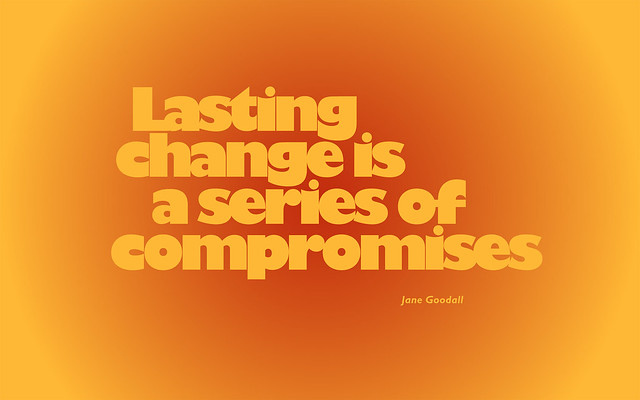
Knowing how to make use of effective compromise generally makes your life and your relationships run more smoothly, even if the concept can sometimes seem very challenging to implement. Here are a few advantages of compromising, as well as some techniques to help you find the “middle ground.”
Good Reasons to Compromise
1. Help advance the greater good. Making reasonable concessions helps you pave the way to finding solutions to difficult conflicts. For example, if you are divorced or separated, and you are the parent who has physical custody of the child, consider being more generous about accommodating your ex’s schedule so that your kids still have the opportunity of growing up with two loving parents; even if they no longer love each other.
2. You can facilitate cooperation. Teamwork flourishes in an atmosphere of mutual trust and respect. By demonstrating your own commitment to the common good, you make it easier for everyone to work together at your office and at home.
3. Strengthening your relationships. Cultivating our relationships is usually far more valuable than coming out ahead on any particular decision. For instance, build good will by welcoming your mother-in-law’s help in the kitchen even if you think (or know) that it would be faster to do a task by yourself.
4. Feel happier. Our happiness frequently depends much more on the way we view events than on the actual events themselves. As you practice accommodating others, you’ll find that becoming more flexible and generous actually feels good.
Techniques for Making Constructive Compromises
1. Uphold your core values and needs. Always be true to who you are. Be honest with yourself and be certain about when you are compromising and when you are just copping out. Preserve your own integrity and be sure to set and maintain healthy boundaries. Be firm and respectful about communicating your rights and desires.
2. Prioritize issues. Save your energy for the stuff that really matters. Another family example: As long as your son is getting good grades and staying out of trouble, maybe you can live with him coming home from college with an eyebrow piercing, for now.
3. Get the facts. Try bolstering and supporting your position by doing the necessary research to back it up. If your boss tends to resist change, and who has a boss that doesn’t, perhaps he will be more receptive to approving a new employee benefit if you can document how it will save money and improve employee retention.
4. Empathize with the other person’s position. When you’re asking someone to meet you halfway, it is vital that you try to put yourself in their shoes or their side of the situation. You need to understand clearly what you are asking them to give up. Listen closely to their concerns and goals so that you can address them specifically.
5. Consider all your options. We all attach different values to the same things. If you and your partner have different standards for house cleaning, maybe the solution is to hire a cleaning service if you can afford it.
6. Express appreciation. Thank people for being willing to make trade-offs. Acknowledge the concessions they make and their contribution to creating more positive and harmonious outcomes. For example, if your employees work through the weekend to meet a production deadline, be absolutely sure that it gets noted in their annual review to encourage them.
7. Stick to your word. Think carefully before making a serious compromise so that you will feel confident that you can live with it down the road. Proceeding slowly is usually much better than making hasty or rash promises that you may later regret.
8. Take accountability for your decision. Once you spell out the terms that you can and will abide by, assume full responsibility for the choices you’ve made. This will help you avoid becoming resentful later.
9. Wield power wisely. Even if you have the upper hand in an interaction, it’s usually best to seek an agreement that’s acceptable to everyone involved. Future situations are likely to run much more smoothly. And, both parties will have peace of mind that they have not been taken advantage of unfairly.
Learning the art of “give and take” helps everyone succeed in the end. Stay true to yourself while being open to making accommodations that create better solutions in both your private and public lives.
Thoughts?
photo credit: http://www.flickr.com/photos/x1brett/2628514332/sizes/z/in/photostream/
Letting Go of Ego

Anytime there is a struggle between doing what is actually right
and doing what seems right,
then your ego is interfering with your decision.
Darren L. Johnson
Logical assessment?
Most people are really poor at evaluating risk and reward. For instance. have you ever been willing to bet $10 on a roulette wheel or the slot machine even though the odds are better than 50% that you will lose? What about buying lottery tickets? Are those wise decisions when compared to your usual logical assessments?
On the other hand, how willing are you to take social risks, like going up to a stranger and saying hello? The risk is almost exactly zero, but the potential payoff is huge. Yet, not many people will take this perceived risk even though this is a nearly perfect situation with very low risk involved, and is potentially very rewarding.
What about more important matters? Are you assessing your life choices wisely? Your actions are largely determined by where you choose to focus your attention. If you emphasize the positive aspects of something and minimize the downside, you are much more likely to take an action. If you have the opposite focus, you are not very likely to move from the spot that you are in.
For any of the big decision you may currently be facing, try walking through this quick exercise and see if it can help you gain some new perspective.
The Positives
Are you truly considering all the ways the risk could pay off? In our example above, you could make a new friendship. You might get a new career out of it. You might meet your spouse or a new golfing buddy. Think about all the potential benefits of taking the risk you have in mind. Make a list if that will help you sort things out.
People will often try to minimize the upside potential of something as an excuse, yes, and excuse, to not move forward. Strive to be honest and accurate with yourself. Avoid giving in to anxiety and making light of, or blowing off the potential rewards ahead. People who allow themselves to be guided by fear tend to have smaller and less satisfying lives.
The Negatives
Are you maximizing or minimizing the downside of your every day decision? Are you focused on the fact that you might be embarrassed or rebuffed? Or do you tell yourself that it is really no big deal and that at the very least they may be flattered your attention? One approach will get you moving forward and headed toward where you want to go. The other will likely keep you stuck exactly where you are.
Maximizing the imagined risk is a certain way to stay where you are… stuck. Minimizing the risk will make it much easier to move forward. Sometimes you have to choose to pull those big girl panties up and wade into the fear. But remember, be accurate with yourself. If you are 100% honest, you will see that you probably have almost nothing to actually lose and potentially everything to gain.
Letting Go of Ego
Imagine, for a moment, that you are completely free of any concern about what anyone else thinks about you. Really sit and think about this for a minute. What would you do, that you aren’t already do now? How would your life change? How would you be different? Just imagine the freedom you would have to move through the world according to your deepest needs and desires.
If you can learn to laugh at yourself and not take everything too seriously, you will arrive at your desired goal much better off. You can choose to laugh more at yourself now and smile when you get older, or you can kick yourself when you get older because you squandered so many opportunities. Be brave!
So…
The next time you are faced with a decision that involves your ego, think about and focus on the actual risk involved rather than an overblown imagined risk. The average person’s aversion to embarrassing himself is an almost overwhelming handicap that can get in the way of reaping all of the great and wonderful things that life has to offer.
Do your best to accurately assess risk and then take the action that makes the most sense. Trust me, this gets easier every time. And. before you know it, your friends will say you are the bravest person they know.
What pursuits have you been denying yourself?
And…what do you plan to do about it today or this week?
photo credit: http://www.flickr.com/photos/zivkovic/5277882656/sizes/z/in/photostream/
Related articles


Getting even…

Get better…

Recommended daily allowance for…relaxation
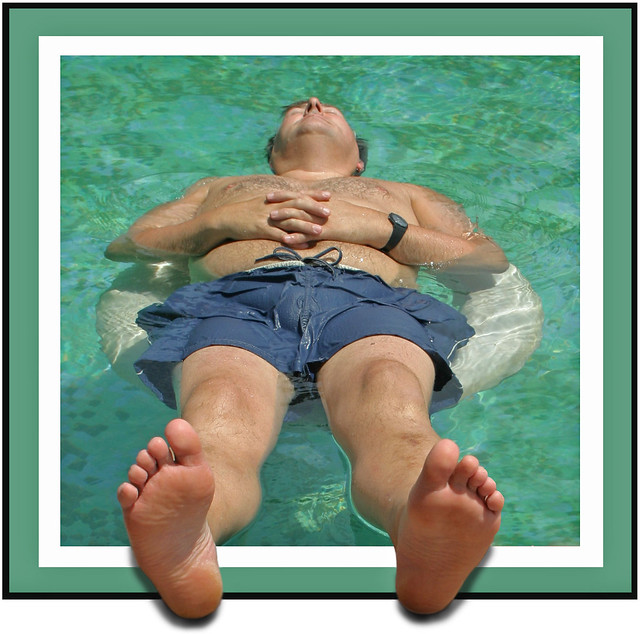
“If a man insisted always on being serious,
and never allowed himself a bit of fun and relaxation,
he would go mad or become unstable
without knowing it.”
~ Herodotus
Stress is one of the curses of living in modern and post-modern times. Everyone suffers from stress. And the stress that we suffer can take a very heavy toll on our bodies, emotions and minds.
When you are feeling stressed out, worn out from fatigue or just simply having a miserable day, the best thing you can do for yourself is relax.
Watching television may be a form of relaxation for some, but it is not a recommended method by experts. When we watch television we are bombarded with commercials, advertising, sounds, images and bad news. So how do we achieve relaxation? If there are thousands of ways you can get stressed, there are also many ways you can relax.
Recent studies have determined that heart disease is linked to anger and irritability, and these are linked to mental stress. Too much stress brings about ischemia which can lead to or cause a heart attack. Relaxation should have a much higher priority for you in light of this information. Managing your anger and attitude is significant in maintaining good heart health, and relaxation can help you manage your stress. Here are a few suggestions…
Transcendental Meditation
One method of relaxation is transcendental meditation. People practicing transcendental meditation usually repeat a soothing sound while meditating. The sound you are most likely familiar with is, “OM.” This sound helps achieve total relaxation. Some researchers have found that practictioners of transcendental meditation can significantly reduce the thickness of their arterial walls when compared to those who didn’t practice transcendental meditation. So there is probably a significant benefit in lowering your blood pressure by practicing this method.
Acupuncture
Another study of alternate relaxation, acupuncture, seems to indicate reduction in blood pressure by initiating several bodily functions which cause the brain to release chemical compounds known as endorphins. Endorphins help to relax muscles, ease panic, decrease pain and reduce anxiety.
Yoga
Yoga is also another method of relaxation and may also have similar effects as acupuncture. In recent studies, participants were subjected to several minutes of mental stress. Then they were subjected to various relaxation methods, such as listening to nature sounds or classical music. Only those who were practitioners of yoga significantly reduced the time it took for them to return their blood pressures to normal levels. Yoga is a form of progressive relaxation.
Breathing
Breathing is one of the simplest methods of relaxation. Breathing influences many aspects of our lives. It affects our mind, our moods and our body. Simply by focusing on your breathing, you can feel its effects almost immediately. There are several breathing techniques that can help you reduce your stress.
Exercise
Another easy way to achieve relaxation is exercise. If you feel irritated, a simple half hour of exercise will often settle things down. Although exercise may be a great way to loose weight, it does not teach you how to manage your stress appropriately. Exercise should also be used in conjunction with another relaxation method.
Massage
One great way of relaxing is getting a massage. To gain full relaxation with this technique, it is important to totally surrender to the handling and touching of a professional therapist. There are many types of massage that also provide different levels of relaxation.
Biofeedback
Another method of relaxation is biofeedback. Biofeedbak trains you to use your own brainwaves to enter states of relaxation. This method teaches you to tune into specific relaxing thought patterns. The usual biofeedback training program usually runs 10hr sessions often spaced over a period of time.
Medications
Medications (drugs) are an extreme remedy for maintaining relaxation. These are often not safe or effective for the long haul. This method should only used by trained medical professionals for their patients. These drugs also frequently carry a potential risk of addiction.
These are but a few of the methods for relaxation available. There are many health reasons why you should focus on your relaxation.
- Besides lowering your blood pressure, which decreases your chance of heart attack or stroke, stress produces hormones that can additionally suppress your immune system.
- Relaxation gives the immune system time to recover and in doing so function more effectively and efficiently.
- Relaxation lowers the activities within the brain’s limbic system, which is the emotional center of our brains.
Relaxation can really be of exceptional benefit once you build a relaxation technique or techniques into your lifestyle. Choose a technique that you believe you can do on a regular basis.
Thoughts?
Related Post
photo credit: http://www.flickr.com/photos/exfordy/1659241225/sizes/z/in/photostream/
5 Ways to express gratitude for what you already have

“Wake at dawn with a winged heart and give thanks
for another day of loving.”
If you have ever gotten caught up in the hustle and bustle of life, then you know how out of touch you can get with the things that really matter. But, every now and then you need to slow down and realize that you actually have plenty of things to be grateful for, regardless of the circumstances in which you may find yourself today.
Each person has their own unique list of the things that bring them simple pleasure, feelings of pure joy, or just a sense of comfort each day. You can be grateful for physical blessings like where you live, the climate you reside in, or even your place of residence. You might be thankful about certain people being in your life. This may include your kids, your grandmother or your best friend.
The most important function of thankfulness is that it allows you to open your heart, mind, and soul to goodness, gratitude, and light. If you’re unsure how to consciously cultivate gratitude, here are a few suggestions:
1. Take five. Allow yourself five minutes each morning to experience thankfulness. Take these moments to simply think about the past day. Say to yourself, “One thing I’m thankful for is________.” Fill in the blank with something you noticed from the last 24 hours. Think on it for a minute or so. Smile about it. Then go on with your morning. This is also a wonderfully uplifting game to play with your children.
2. Appreciate your world openly. Share your gratitude with others. For example, if you’re chatting on the phone with a friend, you could say something like, “I am so glad that I painted the living room that beautiful light teal color. The sunlight reflects on it so nicely.”
Another example is, “I went shopping and the salesperson was so helpful when I wanted to pick out a new dress.” When your verbal acknowledgements to others demonstrate the gratitude you feel, you’ll develop a habit of being more aware and recognizing what you’re thankful for.
3. Notice the small stuff. Promise yourself that you won’t take little things for granted. Because life becomes over-crowded with people, tasks, and objects, you may feel challenged sometimes to notice small bits of wonder in your everyday life. But, if you put your mind to it, you will be astounded at what you see.
Open your eyes to the wonders all around you. They won’t cost you anything. A sunset, a warm cup of tea, or an ice-cold glass of water when you get home from work can be great reasons to feel gratitude. The smell of honeysuckle as you walk by the vine in your front yard or your daughter’s impish smiles are still more things that might remind you of your blessings.
4. Learn to turn your thoughts around. When you discover you’re thinking negative thoughts, imagine a big stop sign and say, “Stop!” Say it out loud if you need to. Then, replace the stop sign with an image of something around you that you’re grateful for right at that particular moment. Think about that object, experience, person, or situation and bask in your positive experience.
5. Keep a gratitude journal. If you find you’re having difficulty remembering to notice the things that stir your inner thankfulness, perhaps starting a gratitude journal would help. A journal is a tangible visual aid that will trigger you to think about what you are grateful for.
Try just putting put the date on the page and jotting down what you’re grateful for at that time. You can write as much or as little as you wish. There are no hard and fast rules to this. Place your journal in a spot where you’ll see it frequently, like on the dining room table, the kitchen counter, or near your favorite chair. This way, you’ll be prompted to experience your gratitude more often.
Being grateful is truly one of the things that makes life worth living! Each time you consciously decide to experience your thankfulness, you’ll feel all warm and fuzzy inside.
Open your eyes, heart and mind to the people, places, things, and experiences you are grateful for. You will begin to feel so much better about your own life.
Thoughts?
Related Posts
1. Gratitude: Not Just for Holidays
2. Passion, success and what really matters
photo credit: http://www.flickr.com/photos/nakevanc/6395975919/sizes/z/in/photostream/

3 steps to learning to love your life in tough times

“Be thankful for hard times in your life.
Try not to look at them as bad things,
but as oppurtunities to grow and learn”
~ Unknown
Loving life may prove to be a difficult task especially when times are hard and the economy is upside down. If you don’t know where you’re going to get the resources that you need to get through the tough days, you will be faced with an even bigger challenge. Where are you going to find the strength just to be able to survive these tough times?
It’s all in your attitude. If you face the beginning of each day, thinking that you will be defeated, what do you think will happen? You must practice looking at the brighter side of things. This economy is unpredictable. You do not what tomorrow will bring. So you have to prepare for the good and the bad that you may face in the days ahead. Here are a few reminders that you can consider if you are faced with such a situation.
1. Think Positive
There are many advantages to this. This attitude will prove to be beneficial especially, at times when you are feeling low and think that nothing is going right. By looking at the negative things with a more positive lense, you’ll be able to conquer everything and come through with the right attitude and a warm heart.
You can’t stop hunger, poverty, war and the other problems in the world. It is ok to be concerned and to help in the ways you are able. But you must face your own situation first. What are the problems that you are continuously facing in your own life? You have to learn how to cope with your own situation and emerge a better person.
You must always start with facing your own life. You can’t help create a better world, if you will not first create a better life for yourself! You must always think positive and act with glee in all the things that you do. This way, despite some of the dreary situations that you may be faced with, you can still find some light, reasons to smile and act kindly towards other to be able to face the days ahead with the right attitude and a brighter outlook.
2. Know yourself……well!
You must understand your strengths and weaknesses to know how you can handle things better. The problems that you are faced with will help define you as a person. In understanding the scope in which you can handle such hurdles you will be able to face the situation with more maturity and understanding as to where life is leading you.
3. Maintain a lifestyle that you can support
Sometimes people are lured by money. They become victims of their own desires and greed. After tasting luxury, many will want more and continue to try to experience such extravagances even when they can no longer afford them.
What do you hear people complaining about these days? They are heavily indebted to credit card companies by being lured to acquire more than they needed or could afford. Credit cards gives people false hope and take their attention away from the real ways of loving life and showing love and affection for others.
Credit cards can buy you things that you have been wanting for a very long time, even if you cannot really afford to pay for them. In the end what happens is that your bill becomes such a burden that you can no longer think of enjoying the purchase. Now all of your mind and energy is focused on how to get the bill paid.
Conclusion:
Tough times show you who you really are. Knowing yourself well, keeping yourself well (both physically and mentally), trying to remain upbeat and maintaining a sensible lifestyle will serve you well in the good and the bad times.
Thoughts?
Related Post
Loving life and self-improvement
photo credit: http://www.flickr.com/photos/deniscollette/2129026844/sizes/o/in/photostream/