
Know Your Stress, and Defeat It

Stress is like an iceberg.
We can see one-eighth of it above,
but what about what’s below?
Unknown
Avoiding Stress
My 18 month old granddaughter has a new favorite expression. “Oh, maaaaan!” Which I can only guess means that things aren’t going as planned or expected in her little life. We each have our own favorite expression when it comes to feeling stressed out, and I wouldn’t bother naming all of those I know. But, for most this feeling of “stressed-ness” is usually related to how they work, or even sometimes to how they choose to relax. Haven’t you ever felt stressed when you know that you should be feeling well-relaxed or even bored? I know that I have.
Since avoiding stress altogether is impossible, it is important for us to find ways to minimize and prevent stressful incidents and decrease the negative reactions surrounding those moments. Whether we like to admit it or not, life is basically a routine we follow like brushing our teeth or eating breakfast every morning. So, planning and preparation go a long way in keeping our reactions, if not the actual stressors under control.
Here are a couple of techniques that work well for me. You can do a few of them in a longer span of time, but as they say– every minute counts.
Managing time
Time management skills can help you find more time to be with your family and friends and may even increase your performance and productivity. Getting these things under control will also help reduce your stress. We will spend more time in a future post discussing this further, but today, let’s look at some of the basic rules for managing your time well.
- Save time by focusing and concentrating, delegating, and scheduling time for you. Make time for yourself. Make an appointment on your calendar/ day-timer, and keep it!
- Keep a record of how you spend your time, including work, family, and leisure time. If you feel like you can’t get control of things, or you don’t know where the time leak is, do a time-study on yourself. You know what I’m going to say next… Write it down!
- Prioritize your time by rating tasks by importance and urgency. Redirect and refocus your time and energy to those activities that are important and meaningful to you.
- Manage your commitments by not over- or under-committing. Don’t commit to what is not important to you. Learn to say, “No” more often.
- Deal with your own procrastination by using a day planner, breaking large projects into smaller tasks, and setting short-term goals and deadlines.
- Examine your beliefs to reduce conflict between what you believe and what your life is like. Are you living out the beliefs you profess? Are the things you think you believe still important to you?
Develop healthy coping strategies
It is important that you identify and stick to your coping strategies. One way to do this is by reviewing and writing about a stressful event, your reaction to it, and how you coped. With this information, you can now visualize what happened clearly and work to change unhealthy coping strategies into healthier ones; strategies that help you focus on the positive and what you can change or control in your life.
What can you control? Two things.
There are two things in life that we have absolute control over. Well three if you count what you’re going to wear for the day. But I digress…
First, you have absolute control over how you will choose to react to things. If you do not feel that you own that, then you have given all of your power away to others to control you and use you as they see fit.
Secondly, you have absolute control over how you treat other people. You have no control over how others may feel about you. We do have some control over what you will tolerate in how you allow other people to treat you. But you do have control over what you will choose to do about it! Now, granted, this will take some initial work on managing your own expectations, of both people and life in general.
Lifestyle
There are some behaviors and lifestyle that people engage in that can have a definite effect on their stress levels. Sometimes they may not cause the stress directly, but they can interfere with the ways that your body seeks relief from the stress and the stressor.
Basic things to do to get some balance back into your life:
- Try to achieve some kind of balance in your personal, work, and family needs and obligations
- Develop and own your sense of purpose in life.
- Get enough sleep, since your body recovers from the stresses of the day while you are sleeping.
- Eat a balanced diet for a nutritional defense against stress.
- Get moderate exercise throughout the week; even if it’s just a walk.
- Limit your consumption of alcohol. If you find that you can’t cut back, then time management is not your biggest issue.
- Don’t smoke. I’m an ex-smoker, having stopped over 25 years, so I know that this is not easy. But it is the right thing and the best thing to do for your own health, and for those around you.
Social support
Social support plays a major role in how we experience and deal with stress. Social support is the positive support you receive from family, friends, and the community. It is the knowledge and comfort that you are cared for, loved, esteemed, and most importantly, valued. More and more research is indicating that there is a strong relationship between social support and better mental and physical health.
Change your thinking
When an event triggers negative thoughts, you may experience fear, uneasiness, insecurity, anxiety, depression, rage, guilt, or a sense of worthlessness or powerlessness. These emotions trigger stress in the body, just as an actual threat would. Dealing with your negative thoughts and how you see things, your perspective, can help reduce stress.
- Thought-stopping helps you stop a negative thought to help eliminate stress. Put a full-stop on the negative thoughts as soon as they start to blossom.
- Examine the irrational or bizarre thoughts. Yes, everyone has them. This helps you avoid exaggerating the negative thought, anticipating the absolute worst, interpreting an event incorrectly, or flat-out overreacting.
- Problem solving will help you identify all of the aspects of a stressful event and find specific, and sometimes unique ways of dealing with it.
- Changing up your communication style helps you communicate in a way that makes your views known without making others feel put down, hostile, or intimidated. This reduces the stress that comes from poor communication. We have recently had a series on communication. Communication is an art. Learn it!
Whatever kind of job you have, stress is an unwanted visitor you should love to boot out of your home and life, ASAP!!!
Stay alert, stay prepared, improve your communication, and be realistic in your expectations and your interpretations.
Thoughts?
Related Post
Think Differently–> Be Different
Links to Communication Series:
Photo credit: http://www.flickr.com/photos/smithmaestro/4461418313/sizes/z/in/photostream/
Related articles


How To Run a Successful Meeting
If you had to identify, in one word, the reason why the human race
has not achieved, and never will achieve,
its full potential,
that word would be ‘meetings.’
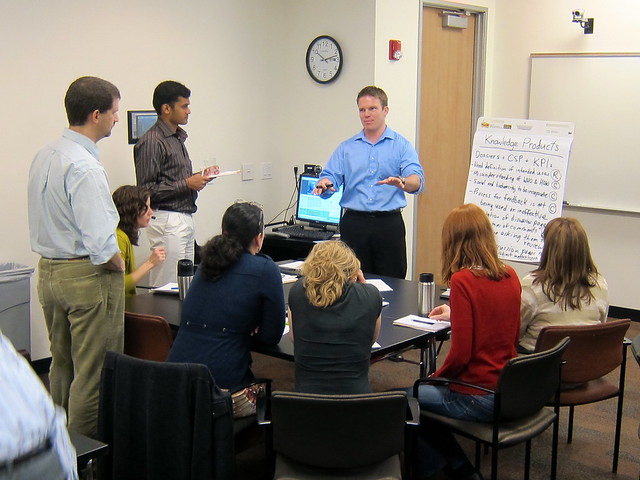
We have all been helpless and hapless victims or been held hostage to the time-suck of non-productive meetings. Some meetings happen simply because they are seemingly etched in stone on the schedule, and we feel we compelled to have them. Some meeting are called by people, I think, to alleviate their own personal boredom or to try to breakthrough some sticking point in a project.
Occasionally, you will get called upon or have the opportunity to lead meetings as part of your job or volunteer activities. Having been in meetings that don’t work, you of course, want to do a better job. You want to make the most of your time to shine.
Job #1 must be to make the meetings pleasant and productive by learning how to:
- Help people stick to the agenda
- Help people feel engaged
- Help everyone stay focused.
Below are a few suggestions for coping techniques to deal with those tricky situations that may occur during your meetings and will help you lead meetings accomplish their purpose in record time.
General Guidelines for Facilitating Meetings
1. Stick to the schedule. Among the most common complaints about meetings are a failure to stick to the schedule and the efficient use of time. Time is money as they say. One of the easiest ways to eat away at your credibility is to abuse people’s time on a regular basis. It’s important to start and end on time. Appoint a timekeeper to back you up if you have difficulty in this area.
2. Circulate an agenda. Make it easier for people to come prepared by circulating a detailed agenda in advance. Review it at the start of the meeting for any additions or changes that need to be made. Set a maximum time for each topic so that you stay on track. This may not always seem practical, but start with a set goal in mind. The time allotted for the total meeting should be set in stone. This gives you additional incentive to stay on task.
3. Tailor your facilitation style to the group. The best approach depends on the experience and preferences of the group you will be working with. Some organizations may follow strict protocols, like Robert’s Rules of Order, while others enjoy less formal discussions.
4. Set ground rules. Prevention is usually the best strategy for dealing with possible conflict. If you know that disagreements are likely to occur, use the ground rules to encourage respectful and constructive dialog. Another suggestion is to be tough on issues rather than on people.
5. Check the equipment before the meeting begins. Ensure that your laptops, microphones and conference call lines are working before the meeting starts. People are likely to mentally wander off if you spend too long debating how to advance the slides, or if your laptop goes into hibernation just when you need it most.
6. Focus on objectives. Identify objectives for each agenda item. Develop action plans for implementing decisions. Always put an action to each objective. Assign responsibilities for follow-up tasks. Set up accountability markers– who, what, when, etc.
Coping Techniques for Common Challenges
1. Get people talking. Give everyone a chance to contribute. Go around the room or table. Ask to hear from people who haven’t spoken yet. Watch for facial expressions or body language that suggests someone may be waiting for an opening to chime in.
2. Learn to politely shut people down. Stop people from talking too much, and from talking about non-agenda items. If a handful of people are dominating the conversation, use your ground rules to establish a speaking order. Tactfully encourage people to wrap up their long speeches. Dividing into small groups may also help to balance the discussion.
3. Remain neutral. Remember that you are the facilitator. The role of a facilitator is to enable a productive group process and open discussion. Stay objective to avoid imposing your own personal opinions. This is especially important because, as a facilitator, your statements may carry more weight than you realize.
4. Overcome impasses. If you sense that there’s going to be trouble reaching a consensus, try pointing out the common ground and agreements that have already been reached. Poll the group before taking a vote to see if more discussion is needed to reach a decision. Suggest tabling topics that seem resistant to being resolved quickly. You can appoint a committee to study them further and report back; don’t forget the accountability markers.
5. Minimize distractions. Having a meeting is difficult when everyone is texting. Start off with an announcement to turn phones off and to please step outside for emergency calls. As any teacher knows, side conversations will usually subside if you wander over in the participants’ direction.
6. Take time for team building. If the group is unfamiliar with each other or lacks cohesion, do a round of introductions and consider playing some icebreaker games. Serving lunch or snacks will provide some social time together. And this should ease some of the tensions as well.
Be the facilitator!
Skillful facilitation creates an environment where all meeting participants can feel comfortable working together toward their common goals.
You can help everyone feel like they can contribute, manage conflicts with finesse, and guide the discussion toward the outcomes that the group is seeking. When you do, you’ll become a valued facilitator and will be pleased with the results!
Thoughts or suggestions?
What would you add to this list?
photo credit: http://www.flickr.com/photos/pagedooley/6861256042/sizes/z/in/photostream/
Related articles


Is that a collection, or are you a… hoarder?

We are not cisterns made for hoarding,
we are channels made for sharing.
Shopping Bags
One of my girlfriends is a neat-freak, and that’s okay for her. I am one of her many friends who is not. For us, she has a phrase, “You know that you’re just two shopping bags of being a hoarder.” I am reasonably sure that is not true. I have seen the TV show, “The Hoarders” once or twice. And, even though my house may not smell of Clorox and Pine-sol, it doesn’t look anything like those.
This show has focused new attention on the issue of hoarding. Most of us have much more than we need. Maybe you really are being buried alive by your stuff, or maybe you just need to empty out that hall closet. But a hoarder, certainly not…
But, there is always something useful that we can learn from every situation. So, let’s back it down a notch and look at what we now know about hoarding along with a few techniques to manage mild tendencies, and when to seek intervention for you or your loved one.
Basic Facts about Hoarding
1. First, we need to recognize that hoarding is a mental health issue. The major symptoms include a strong urge to acquire items and trouble with discarding them that interferes with daily life. Those who struggle with this dilemma may suffer from depression or attention deficit disorders, but often they have no known history of mental illness.
2. We need to try to identify the underlying causes. It may be that you are just indecisive and try to avoid making mistakes by holding onto everything just in case. It may also be that we have a propensity to procrastinating and have difficulty getting organized.
3. Knowing the risk factors. Anyone can become a hoarder but older women who are socially isolated are at higher risk. Keep this in mind if you have been thinking that you need to change your own life circumstances or if you’re caring for an aging parent or other relative.
4. Put yourself to the test. Compulsive hoarders may need professional intervention but there are also tests that can help you make an initial assessment. Go to Hoarding Rating Scale Interview. It has 5 simple questions with replies ranging from “no problem” to “extreme.”
Techniques for Coping with Our Mild Hoarding Tendencies
1. Organize your valuables. Organization is a key distinction between being a collector and being a hoarder. Create an attractive display for your prized books or antique dolls so you can feel good about them and enjoy sharing them with others.
2. Budget your Purchases. Buy only what you can afford to pay cash for. Look for bargains or save up in advance for major new purchases.
3. De-acquisition as needed. That sounds like such a lovely phrase, doesn’t it? Give the stuff away!!! Every librarian or museum director appreciates the value of de-selection guidelines. Make your best stuff appear more attractive and accessible by getting rid of items in poor condition, objects of lesser quality, or something you don’t plan to use, display or pass on to your children.
Intervention May Be Required (Severe Hoarding)
1. Be honest with yourself. If your situation is a health or safety risk, get help. Animal hoarding, fire hazards or nonworking utilities can pose urgent dangers.
2. Clutters Anonymous is a self help group with a 12 step program like Alcoholics Anonymous.
3. Enlist support. Reach out to a friend. Call up people who really care about you and can help you get rid of some of your stuff. Ask friends and family to pitch in with removal tasks and providing more opportunities for socializing.
If you are a caregiver trying to help someone else, caregivers and their loved ones benefit from building alliances. Ask your local council on aging about relevant programs within your community. Look into professional services like house cleaning agencies and storage centers.
4. Find local therapists and resources as needed. This can be presented as an option, as it is a highly personal and individual decision.
5. If you are providing this service for someone else, always remember to be compassionate and sensitive. Be respectful and nonjudgmental to avoid exacerbating any feelings of shame. Offer sincere praise as progress is made. It’s usually easiest to start out by focusing on tasks like sorting rather than throwing things away. Ask for permission before touching anything.
Those TV shows, even though we think they are either funny or appalling, have probably helped many people by shining a light on the issue of compulsive hoarders. Many more have probably gone out to get the assistance they need.
But remember, the solution usually reaches much deeper than just tidying up the house a bit.
Recognize the warning signs for hoarding in yourself, as well as those you care for and about, so that you and the people you care about can restore order in your emotional lives and in your homes.
Thoughts or additional suggestions?
Additional Resources:
Hoarding Rating Scale Interview
photo credit: http://www.flickr.com/photos/theophileescargot/5950985345/sizes/z/in/photostream/
Related articles


Helping or Hobbling?

Have you ever found yourself in a position where you felt you were doing everything you could to help someone yet their negative situation just got worse and worse? Have you ever felt like you were helping someone, but they keep falling into the same hole, over and over and over? If so, it’s possible that you were enabling the other person rather than helping them. You might be enabling whenever you’re trying to help someone, but your actions are, instead, you are making their situation worse.
Example
You have a friend and co-worker, Mary, and you have noticed that she has been drinking a little more than usual. Lately, she’s coming in late to work and asking you to cover for her. When the supervisor asks you where Maryis, you say, “She went to Human Resources to ask a question. She should be right back.”
After work, everyone goes out for drinks and snacks together. Mary doesn’t have any money so you offer to buy her beverages and she accepts. Later that evening, Mary admits to you that she hasn’t finished her part of a report that’s due tomorrow. Mary asks if you’ll finish her
partially completed work assignment. Although you’re tired and would rather go home and just relax, you agree to take the report home and type it up before tomorrow morning.
Unfortunately, even if you don’t mind offering your consistent aid, your efforts are ensuring that Mary doesn’t ever have to take responsibility for her actions.
What’s the Solution?
What can you do to break the cycle of enabling someone you care about? We all know that it is not easy to say, “No,” especially to people that we care deeply about. But, keep in mind that we are trying to help them. And, that is part of what friends do.
Helpful Steps:
1. Stop. Even though it’s your friend or loved one, picking up the slack for them is not helping them get better. Mary probably isn’t doing to stop drinking or get her work donr if she knows that you will support the habit and do the work.
2. Observe, instead. Rather than being so quick to jump in and put out every fire by offering to help, sit back and watch what happens. Notice patterns in the person’s behaviors. They will have to take one of a few paths:
- They will step up and get the job done
- They will be forced to admit that they have a real problem, or that they can’t actually get the work done.
- They will ignore you and your suggestions, spend time trying to convince you that you are incorrect in your assessment.
3. Listen. Stay informed by hearing how your friend or loved one feels. A good friend listens attentively. Consider listening an important act of caring. Make listening the most important aspect of your friendship, rather than doing.
4. Back off a little. Allow opportunity for your loved one to figure things out for themselves. Keep in mind that when you jump in and spontaneously offer your assistance all the time, the individual is robbed of opportunities to learn to resolve their own challenges. And they ususally possess the resources and mental faculties to get things done.
5. Decline any direct requests for help. Recognize that your continued efforts to pick up the slack now are setting up your friend or loved one for a big fall later. Accept that it’s better if it happens sooner – when the situation isn’t so far out of hand – than later. As hard as this is, sometimes we have to let people fall in the hole si that they will wake up and see for themselves that there is an issue.
Using the example above regarding Mary asking for your help with her report, you could say something like, “Oh, I’m so sorry, but I can’t finish your report. I need to pick up my daughter and do the laundry when I get home.” Then say nothing else. Yes, silence…
6. Recognize it’s not really your job to fix all of their troublesome situations; especially when they happen over and over again. When you decline to help, you’re silently placing the issue back squarely on their shoulders where it belongs. Remember, it’s not your situation; it belongs to them.
7. If none of the above tactics seem to flip the switch, then you only have one thing left to do. Disengage emotionally from the person. Once you understand what you’re doing, you’ll be better able to remain on the outside of your friend’s troubling events. Think of your friend and their issues as quicksand. Then, decide to remain outside of the area where you will get pulled in.
You have now made the decision that you will no longer allow yourself to get “sucked in” to your friend or loved one’s current crisis. You can still be their friend or confidante and spend time with them, if you choose. But you’ll avoid being pulled in to the fray of your friend’s ongoing drama. This is a hard and painful step. But I can almost guarantee that you will begin to feel lighter…eventually. When you disengage emotionally, applying all the above strategies is also much easier.
Be honest with yourself, first…
You know what? You may not be able to, or even want to take this drastic last step. And, that’s okay. All I’m reccomending is that you just be honest with yourself. You have now accepted the fact that you will be there for them whenever they need help, and everytime they find themselves in a jam. And that’s okay, if it works for you. You will also now know what to do if and when it stops working well.
However, if you believe you’re caught up in the cycle of helping a friend or loved one too much, step back and examine your relationship with the person. Then, try applying the strategies above to stop enabling their self-destructive behaviors. As your loved one’s world becomes more overwhelming to them, it should encourage them to seek more direct assistance in resolving their underlying issues.
Thoughts?
photo credit: http://www.flickr.com/photos/br0wser/138553816/sizes/z/in/photostream/
7 Steps to Overcoming Disappointment

We must accept finite disappointment,
but never lose infinite hope.
Getting the Bear
There is an old saying- yes, I am old and I know a lot of sayings. There is an old saying that says, “Some days you get the bear, and some days the bear gets you.” Some days you win, and some days you don’t win. Because life is not always perfect, everyone gets to experience situations that bring feelings of disappointment from time to time. So, it is important that you develop your own personal tool kit of ways to deal with, confront and combat these emotional upsets so that you can move past them and go on to better things.
Suggestions for your basic toolkit:
1. Feel it and acknowledge it. Allow yourself to feel however you feel. When a troublesome event takes place, it is completely normal to feel disappointed and a little let down or deflated. Your feelings are a normal, natural part of you, and a natural part of the process of grief. And, you are entitled to feel disconcerted occasionally. So, take a little time to think about what has made you upset and how you feel about it.
2. DO NOT DWELL! Don’t get stuck here. Refrain from attributing too much importance to the situation that brought you the disappointment. Often people make the mistake of exaggerating the consequences of the event. Don’t blow things way out of proportion relative to the event, or what may come of it.
For example, if you have been passed over for a promotion, you may begin to think, “I’ll never get an opportunity to advance at the office again. I guess my career is over.” Instead, be realistic about the impact of the recent disappointment. Okay, it’s a setback. But it’s just one hitch. You will have other opportunities to recover and shine.
3. Check in with Yourself. Revisit your goals. What is your ideal or optimally visualized outcome? What are you seeking in life? Where are you going? Have you established both personal and professional goals that stimulate, motivate, and excite you? Now that you have allowed yourself the time to sort through your feelings of disillusionment, it is time get up and shift gears, and figure out what’s next.
Spend some quality time reviewing your personal and professional goals and renewing your efforts to achieve them. Don’t be surprised if your goals have changed since the last time you thought about them. This is all part of your growth process. For me, the goals that I have now are a little different than those I had 20 or 30 years ago. Reassess.
4. Dream Big! Construct a dream board or a vision board. Are you working on getting some clarity in what you want in life? Making a dream board will help you do exactly that. Also known as personal collages, a dream board can include pictures, drawings, and sayings about everything in life that you are seeking.
5. Narrow the field. Pick 1 or 2 goals, and focus on those. Everyone has a long list of things they’d like to do. Choose at least one personal and one professional goal to focus on for the next month. Keep that goal in your thoughts each day by placing it in your calendar, a note in your car or a sign on your mirror. Like a laser beam, concentrate your efforts on one or two goals at a time. This way, you will leave your feelings of disappointment behind all the sooner, and begin to replace them with more positive feelings and actions. You will also be able to focus on and commit to achieving a result that is very important to you.
6. Open your mind. Recognize that life offers you all kinds of possibilities and opportunities. Actually, there are probably plenty of ways to expand your horizons at your place of work and in your field. Avoid letting a single disappointing occurrence or setback become a constant and continual source of nagging negativity. Look around yourself at all of the opportunities you have now. Realize that more will be coming along every single day.
7. Press on. Onward and upward…to infinity. Sorry, couldn’t resist. When you are moving forward in life, you are less affected by the occasional setback or disappointment. Consider your disappointment a thing of the past and vow to yourself that you will leave “this thing” behind you and move on. Make a short list of what you will do over the next few days to achieve the goals you have selected to focus on. And actually do them!
These are just a few of the many available strategies you can use to help get past the disappointing times in your life. By making the time to make a vision or dream board, focusing on just 1 or 2 goals, and moving on with your life, you will give yourself permission to leave your disappointment behind and embrace renewed faith in your almost-perfect life! When you allow yourself to own your feelings, avoid placing too much emphasis on an upsetting event by getting stuck there, and review your life goals, you are well on your way to better and brighter days.
What’s in your toolkit?
photo credit: http://www.flickr.com/photos/bestrated1/143388756/sizes/z/in/photostream/
Related articles


Create Your Future…

Desires and accomplishments

Vision Board: Let’s Make One!

Weekend Project…THIS Weekend!
Most of us are visual learners, so we are going to spend some time talking about vision boards. In the past I have mentioned using vision boards as part of a plan to achieve our goals and stay on task. Today, I am going to backtrack a little, and talk about how to make one…THIS WEEKEND!
Why?
Do you ever feel that you need to keep pushing yourself to stay focused on your goals? A vision board can be very effective to have daily reminders of what you want to accomplish. Using a vision board is one way to consistently work toward bringing your dreams to life.
What is a Vision Board?
A vision board is a craft project. I know what you are thinking, “I hate crafts!” Do it anyway. It is a collage that includes pictures and words that reflect your life goals. It can be very broad, addressing your life in general, or it can be about one or more specific areas you choose.
A vision board shows what you’re truly seeking in life; what you really want. So, before starting to make your board, sit down with your single piece of paper, and ask yourself what your goals are. “What do I want my life to be like?”
Prep Day: Preparing to Construct Your Vision Board (Friday or Saturday)
Ok, we are committed to completing this.
1. Gather supplies. You’ll need:
- Use a large square or rectangle of poster board or foam core board as the base of your vision board. I use regular poster board. The advantages are, I think lightweight, easy to handle, no new holes in the walls.
- colored ink markers
- magazines with plenty of words in headlines and pictures
- scissors
- glue
- time
2. Think about what you’ll include in your board. Choose the life area(s) you want to address: all aspects, such as prosperity, relationships, family, sports, health, school / education, jobs, and careers or just 1-2 of your most-sought-after goals.
You will want to use pictures and words about the things you desire most, the place(s) you want to live or visit, and anything else representative of the lifestyle you seek.
3. Set aside time by making an appointment with yourself. Plan time to start work on your vision board. Schedule a date and time to make your board when you’ll be uninterrupted. Allow yourself a couple of hours. You might not complete it in one sitting. That’s okay. It’ll take some time to browse through magazines and select images to clip and use.
Vision Board Day! (Saturday or Sunday)
Let’s do this!
1. What are your most important goals? Set a timer for 20 minutes and clarify to yourself what you want in life. Right this moment, what’s important to you? What do you want to pursue? It’s okay if you’re not sure. But give yourself time to think about it. When you can emotionally connect with your goals, you’re more likely to achieve them.
2. Find the pictures you want to use. What picture reflects the goal you want to pursue? Remember this has to make sense to you. Choose pictures that “speak” to you, or resonate with you. Browse through magazines and clip images that reflect your goals and dreams.
Then, without gluing anything down, arrange and re-arrange the pictures on the poster board until you are pleased with the way it looks. Leave a space somewhere on the poster board to place a favorite picture of you. I placed mine in the center of the board.
Once you have a pleasing arrangement, glue it all into place.
3. Include words to express goals and desires. Write words that connect you with the pictures. Express your thoughts and emotions using the markers. Be bold. Dream big!
You might choose to clip words from magazines (larger print is best) and glue them on your vision board. You can use clipart from the computer. But do NOT get distracted. This is NOT the time to check in on your FaceBook or Twitter account. This is a time that you have set aside specifically to devote to your goals and dreams!!
4. Glue on a picture of yourself that you like and voila, you’ve just created your first vision board!
5. Recognize that this is a process. You might start out making your vision board about your career and discover you’re really more interested in
deepening friendships or making money from a new job that you’ve never tried. That’s okay; switch gears on this board or even construct another board later.
6. Display your vision board. Hang it in your study, bedroom, closet or anyplace that you’ll see it every day. Stop and look at it, touch it, and say out loud, “I’m working for/on that!” Let yourself get really excited about the
prospect of achieving your goals.
Making a vision board keeps you oriented toward your life desires. Make a new board later as you accomplish your current goals, adding new ones. Keep yourself motivated and moving in a forward trajectory so that you can attain your goals and dreams by making your own vision board.
Please let me know how this works for you.
photo credit: http://www.flickr.com/photos/23889619@N04/3240109779/
Shifting Out of Impossible

Big Dreams
Each of us, at some point in our lives, has dreamed of being someone special, somebody important. Who among us hasn’t fantasized about being the one who hits the game-winning home run? Or being the homecoming queen? Or striking it rich, being successful, or happy? Everyone dreams big dreams and has some great aspirations. Sadly, for most, dreams remain just that – dreams. And the aspirations of youth easily collect dust in the attic or corners of our hearts and minds. This is indeed a sad turn of events in the lives of many. Instead of experiencing exciting adventures in self actualization, people get caught up in the humdrum and doldrums of living from day-to-day and just getting by.
But, life could be so much different than that, if only you learn to aim higher. The most common obstacle most people face in setting goals is the word “impossible”. They often get hung up thinking, “I can’t do this. It’s too hard. It is just too impossible. No one can do this.” But, if everyone thought that way all of the time, there would be no more inventions, no innovations, and no breakthroughs in human accomplishment.
On the other hand, there are some people who suffer from dreaming totally outrageous dreams and but never take the important step of acting on them. What’s the result? The results are broken dreams, and tattered aspirations.
If you limit yourself with self-doubt, and self-limiting assumptions, you will never be able to break past what you now deem as impossible. If you reach too far out into the sky without ever taking any concrete steps toward your goal, you will find yourself barely clinging to your “impossible dream”.
Let Us Shift
Here is an exercise for you to try to see if you can get some momentum going. Yes, if you’ve read this blog on any consistent basis, you know this will involve writing things down. Sorry, that’s how I roll…
Get a single piece of paper and write down some goals in your life. Make 3 columns.
- The first column should be titled, ‘Things I know I can do’.
- The second column is ‘Things I might be able to do.’
- And the third, ‘Things that are impossible for me to do.’
Now, look at each of these columns. Every day you should work toward accomplishing the goals that are in column #1, ‘Things I know you can do’. Check them off as soon as you have been able to accomplish them.
As you are able to slowly check off all of your goals under that heading, try moving to column 2 and accomplishing the goals you have placed under ‘Things I might be able to do.’
Then as the items that you have written in the ‘Things I know you can do’ are accomplished, you can move the goals that are under things that are ‘impossible for you to do’ to the list of things ‘you might be able to do.’
As you accomplish more of the goals in this 2nd category, you will begin to notice a shift in your thinking. A new level of energy will come with your sense of accomplishment. Part of the shift is that you have subconsciously raised the bar for yourself on what you can actually get done.
As you work through this process, you will find out that many, if not most, of the goals you thought were unlikely have suddenly become easier to accomplish. And what once seemed absolutely impossible, doesn’t seem so impossible after all.
Almost Unlimited Potential
You see, the reason that this technique can work for you is that you do not have to limit your imagination. You can aim high, and start working toward those goals little by little. Aim high, but always be realistic with your expectations. What do I mean? I will use myself as an example. It would be foolish of me to write down that I want to be a world class left-handed bowler. I am mature in age, can function ambidextrously, but am predominantly right-handed, have had rotator cuff surgery (twice), am no longer really interested in bowling or getting sports trophies. So you can see, that even if I held this as a goal, it is not a physical possibility. Not to mention, it isn’t an interest, so my motivation to pursue it would be difficult, at best to sustain.
Work Is Required
Those who just dream toward a goal without working hard end up disappointed and disillusioned. On the other hand, if you told someone a hundred years ago that it was possible for man to be on the moon, they would laugh at you. If you had told them that you could send mail from here to the other side of the world in a matter of seconds, they would say you were out of your mind. But, through sheer desire and perseverance, these impossible dreams are now every-day realities that we don’t give much thought to.
Thomas Edison once said that genius is 1% inspiration and 99% perspiration. Nothing could be truer. For one to accomplish his or her dreams there has to be work and discipline. But it is important to note that the 1% part needs to be a BIG dream, and not some easily accomplished one. Don’t short-change yourself by setting the bar too low.
Ask anyone who spends a lot of time at the gym, and they will tell you that there can be no gains unless you work a little outside of your comfort zone each time. Remember the saying, “No pain, no gain”? That really just about sums it up.

Dream Bigger!
So keep dreaming! Don’t get blocked by your perceived notions of your limitations. Think big and work hard to attain those dreams. As you move up the ladder of progress, you will continue to see that the impossible will continue to become a little bit more possible with each step.
Doc
photo credit: http://www.flickr.com/photos/morberg/3842815564/sizes/z/in/photostream/
Related articles


