
Do kindness…

4 Steps to wiser decisions

The most difficult thing is the decision to act, the rest is tenacity.
The fears are paper tigers. You can do anything you decide to do.
You can act to change and control your life;
and the procedure, the process is its own reward.
Life can be described as a a road, a journey, and a trip. There are long and short roads, smooth and rocky roads, crooked and straight paths. In your life, many different roads and opportunities will come your way as you journey on. There are roads that may lead to a life of single blissfulness, married blessedness or religious vocation. There are also roads that lead to fame and fortune on one hand or isolation and poverty on the other. There are roads to happiness, just as there are roads to sadness. There are roads that point toward victory and jubilation and roads leading to defeat and disappointment.
Just like any road you drive down in your car, there will be corners, detours and crossroads in life. The most perplexing road that you will encounter is a crossroad; round-abouts may be a close second. At the crossroads of life, you are faced with multiple roads to choose from, and have limited information on where each road will go. So, which road will you choose? What guarantee do you have that you have chosen the right one along the way? Would you take just any road or just stay where you are staring at the crossroad.
There are no guarantees in this life.
You do not really know where a road will lead until you get on it. There are no guarantees. This is one of the most important lessons you need to learn in life. Nobody ever said that choosing to do the right thing all the time would always lead you to happiness. Loving someone with all your heart does not guarantee that it will be returned. Gaining fame and fortune does not guarantee happiness. There are just too many different possible outcomes that you really don’t have control over. The only things you have complete power over are the decisions that you make, and how you’ll act and react in different situations and circumstances. Wrong decisions are always best seen in hindsight.
Honestly, if you had known that you were making a wrong decision at the time, would you have gone ahead with it? Probably not! Why would you choose a particular path when you knew it would get you lost? Why would you make a certain decision if you knew from the very beginning that it was not the right one? It is only after you have made a decision, gone through the experience and reflected on it that you realize that it was either sound or not. If the consequences or outcomes are good for you, then you will usually judge that you have decided correctly. Otherwise your decision was wrong.
You are in control. Take the risk. Decide.
Since life offers you no guarantee and you won’t know that your decision is wrong until after you’ve made it, then you might as well take the risk and make a decision. It is definitely better than keeping yourself in limbo. Although it is true that one wrong turn can get you lost, it could also be that such a turn may provide an opportunity for an adventure and open more roads.
It is all a matter of perspective. You occasionally have to choose between being a lost traveler or an accidental tourist in life. But, take caution that you do not make your decisions haphazardly. Taking risks is not about being foolish, careless or stupid.
Here are some pointers that can help you choose the best options in the face of life’s crossroads.
1. Get as much information as you can about your situation. You can not find the confidence to make a decision when you have too little information about what you are facing. Just like any news reporters, ask the 5 w’s: What, Who, When, Where and Why.
What is the situation? Who are the people involved? When did this happen? Where is this leading? Why are you in this situation? These are just some of the possible questions to ask in order to know more about your current your situation. This is important. Often the reason for indecision is the lack of sufficient information about the situation.
2. Identify and create options. What new options does the situation give you? Sometimes the options are few, but sometimes they are numerous. But, what do you do when you think the situation offers no options? This is the time when you need to dig a little deeper and create your own. Put your creative mind to work. From the most simplistic, all the way to the most complicated of ideas, entertain them all. Do not shoot any ideas down when they first pop into your head. Sometimes the most outrageous idea may prove to be the right one in the end. You can ask a friend to help you identify your options. But be sure that you make the ultimate or final decision yourself.
3. Weigh the pros and cons of every option. Assess each of your options by looking at the advantages and disadvantages they each offer you. In this way you can gain more insights about the possible outcomes and consequences of each of them.
4. Trust yourself and make the decision. Now that you have completely assessed your options it is time to trust yourself. Remember that there are no guarantees and wrong decisions are always best seen in hindsight. So choose…… Decide…… Believe that you are choosing the best option at this point and time.
Now that you have made a final decision, be ready to face its consequences good and/or bad. It may take you to a place of promise or a land of problems. But the important thing is that you have chosen to fully live your life instead of remaining as a bystander or passive audience to it. Whether it is the right decision or not, only time can tell. However, do not enter into your decision with regret. Instead make it a point to learn from each decision and keep in mind that you always have the chance to make better decisions in the future.
Thoughts? What other steps would you add to this process?
Related Posts
1. 5 Ways to change your perspective
photo credit: http://www.flickr.com/photos/rubyblossom/5257327180/sizes/z/in/photostream/
Related articles


R-E-S-P-E-C-T Yourself
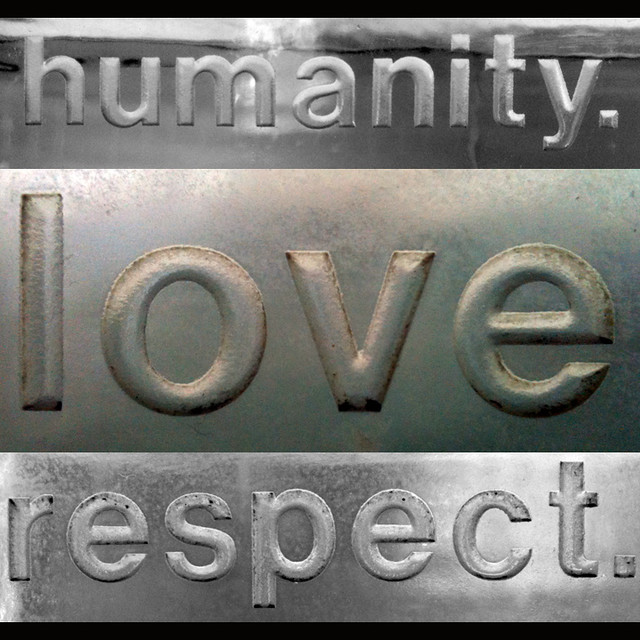
“Respect your efforts, respect yourself.
Self-respect leads to self-discipline.
When you have both firmly under your belt,
that’s real power.”
~ Clint Eastwood
Although you may not pay much attention to it in your every day life, how you take care of yourself is crucial to the quality of your life. Self respect is an indication of how you view yourself. And showing self respect keeps your positive feelings about you flowing, growing and glowing. Feeling good about yourself and demonstrating self respect is kind of a chicken and egg situation. It is difficult to tell which of these comes first. Do positive emotions and thoughts about yourself lead to your increased self respect and self-valuation, or is it the other way around? Your personal experience will tell which of these feels most true to you.
Increasing your self respect:
1. Consider your own feelings. To be true to yourself and give yourself respect you must realize that your emotions are at least as important as everyone else’s. So if you’re feeling uncomfortable about a situation or a person, you must learn to act on that information. Take your own feeling into account in your everyday life and in the decisions and choices you make.
2. Avoid making self-deprecating comments. These types of comments are often used as humor to help build up rapport between people. However, if you are uncertain about whether you are treating yourself with the respect that you deserve, stop making them until you’re feeling more secure about yourself. What you say about yourself over and over eventually becomes what you believe.
3. Attend to your emotional needs. Self respect is apparent through the things you do to make yourself comfortable, content and happy. If a relationship constantly makes you feel emotionally drained, upset or out of balance, perhaps its time to do something about it. You are the only person you can count on to take care of yourself emotionally.
4. Tell yourself that you deserve respectful treatment. Why? This is as simple as it gets:
- Because you’re a human being, you deserve to be treated with fundamental human courtesies, including respect.
- Because it is vitally important that you recognize your own value.
5. Avoid allowing anyone else to treat you disrespectfully. Be clear that you expect to be treated with kindness and care, whether you’re interacting with a co-worker, your partner or your children. Sometimes you may think or feel that you’re giving someone a break by not insisting on being treated well. But, when you allow others to treat you poorly, you are neglecting your own self care and enabling them to practice negative interpersonal habits with you as well.
6. Behave in ways that show that you care about yourself. The manner in which you conduct yourself sends a strong message to the rest of the world. Taking care of your body, watching the language you use and refraining from engaging in socially unacceptable behaviors (eating or drinking too much, loosing your temper and speaking inappropriately), show that you have a certain measure and level of respect for yourself.
Think of someone you admire and respect. What is it about this person that earns them respect? Strive to emulate that. You’ll be amazed how your own self respect will grow.
7. Always treat others with respect. In order to treat others with respect, you need to have a clear idea about how to act in respectful ways. Then you can turn these same responses toward yourself. Make showing respect a priority and a way of life.
Conclusion:
Improve your view of yourself, value who you are. Try out some of these strategies for practicing self respect every day, starting today. As you make these practices habitual, you’ll automatically begin to treat yourself and others in more respectful ways. You’ll be amazed at how much the quality of your life will improve!
What other ways can you show proper respect to yourself?
Related Posts
1. The importance of role models
2. 7 Ways to Use Habits to Reach Your Goals
photo credit: http://www.flickr.com/photos/bswise/4621075758/sizes/z/in/photostream/
The Importance of Role Models

If you’re giving life the best that you got, you are already putting in the energy required to live your life the way you choose. Feeling good about yourself is integral to living your best life. However there will be times when you aren’t quite sure what to do next. How do you proceed then?
If you are ever uncertain about how to approach a project or challenge, think about the people who have been your role models and mentors. If you don’t have any that come to mind easily, perhaps it is time to get one or two.
It is important to have at least one role model. Many people have more than one, depending upon which elements of their lives they’re working on at a particular time. For example, if you love to write poetry, Maya Angelou would be an excellent role model. If you love to work out and stay in shape, perhaps Chuck Norris is the person you want to look up to for your physical fitness.
Whatever your passion, having a role model will compel you to work harder as you take steps to emulate them in pursuit of your own specific goal. Having a role model can also be valuable to you in other ways.
1. Create your own success. While it is good to follow the example of someone who has achieved what they wanted, it may lead you to a different kind of success than they have achieved. However, their modeling will still help you make good decisions and go in a direction that will benefit you the most.
2. Get inspired. If you have ever been truly inspired, you understand the impact this can have on your life, as well as your emotional well-being. It fills you with energy and clarity. When you meet or know about a person whose at the top of their game, and if you are inspired by them, you will work your hardest to achieve your own objectives.
3. Getting through the tough times. When you have a role model to study, observe and learn from, you can gain a different perspective on your own life. No matter what type of storms you weather, you can call upon the inspiration you get from your role model to help you make it through almost any challenge.
Don’t worry, direct contact with your role model isn’t required. All you need do is study them, reflect on them and what they have done to be successful. When you think about them, your spirits will be lifted and you’ll feel inspired to do whatever it is that makes you feel joyful and content.
4. Learn about and study someone who has achieved some of the things you’re passionate about. Your role model provides you with a great subject to explore and learn from.
Types of questions you want to explore are:
- How and where did they grow up?
- How did they get interested in the skill or talent they excel in?
- How long have they been engaged in the activity?
- Do they share any hints or tips about how to be good or excel at the particular activity that you’re interested in?
You will gain important insights that you can apply to your own life by studying your role model. The INTERNET is a great source of information for this.
5. Improve your own performance. The more you try to be like your role model, the better you’ll do at your chosen hobby or activity. Having a role model to look up to will enrich your life and help you develop yourself. Seek out and establish at least one good role model to emulate. Your life will be more manageable and satisfying for having done so.
And, who knows? Someday you will find that you are someone else’s role model as well!
Doc
Related Posts
1. Priorities: Setting and Ranking Them
2. 5 Ways to change your perspective
photo credit 1: http://www.flickr.com/photos/jdhancock/7179891505/sizes/z/in/photostream/
photo credit 2: http://www.flickr.com/photos/webmonk/6215721735/sizes/z/in/photostream/
photo credit 3: http://www.flickr.com/photos/soldiersmediacenter/3322116771/sizes/o/in/photostream/
Related articles


5 Ways to change your perspective

“There are no facts, only interpretations.” –
Friedrich Nietzsche
Do you ever feel like you’re stuck in a rut? The way you approach each day largely determines the kind of day, and ultimately life you will have. At some point, you’ve most likely experienced a troublesome event that you felt stuck in, until you decided to adjust how you were looking at the situation. Then, once you altered your perspective, you were able to clarify the issues and find a solution.
Changing your perspective can be enlightening. A fresh look at a situation can even open your eyes to see a person differently.
Here are a few strategies you can use to alter your perception for more positive results in your life:
1. Entertain the improbable. Maybe you don’t think something is possible. But what if your heart’s desire could become a possibility by just changing your perspective a little?
For example, maybe you’ve tried dieting over and over again without getting the results that you wanted. But what if this time, for a change, you shift your perspective from dieting to changing your lifestyle. You could then state with confidence, “I am losing weight and getting fit.”
2. Vow to be more accepting. New people and situations are inevitable in your life. Sometimes, the best way to change your perspective is to be open to new ideas brought to you by your new acquaintances. Why not see what happens if you’re more open-minded and accepting? Tell yourself you’re letting go of your “old” templates for looking at things.
3. Seek a more positive lifestyle. Whenever you want to enhance your life more fully, shift the way you see something to a more positive position. Example: Let’s say your two of your friends went out shopping and didn’t invite you to go. You might feel left out, rejected, and even get angry about it. But what if you were to view the situation differently, even positively? Perhaps they didn’t really plan to shop. Maybe it happened spontaneously, and they knew you were busy. Maybe they’re shopping for you.
Recognize that when you become focused on having a more positive life, your perspective will change for the better.
4. Avoid the “old ways” of looking at things. When you make the connection that your perspective is what creates any discontent you feel, you can then choose to view things differently. For example, let’s say you usually think your boss gives you the toughest projects with the most work just because he wants to dump on you. What would happen if you were to shift your thinking to the idea that your manager trusts you most to successfully complete the most challenging of projects? You’d feel a lot differently about your boss, job, and your own abilities.
5. Give people another chance. Even if someone has upset you, entertain the idea that it wasn’t intentional. Maybe they were having a rough day or made a mistake in judgment. Perhaps a misunderstanding took place between you. One of the best ways to get out of a rut is to change how you respond to those around you.
A great strategy to change your perspective is to let go of a grudge. Try it, you’ll love it. After all, grudges and anger hurt you far more than they ever hurt the other person.
If you want to get out of your rut, try applying these simple techniques to change your perspective. You’ll discover the power you have over your own life and be thrilled with the results.
What would you add to this list?
photo credit: http://www.flickr.com/photos/bsamantir/4007629931/sizes/z/in/photostream/
Related articles


Time Management: Techniques

“Time is at once the most valuable and the most perishable
of all our possessions.”
John Randolph
Each of us has only 24 hours in a day to work with. Time management strategies will help you accomplish more in less time, rather than having to extend your work. Here are a few simple strategies that you can apply to achieve that.
1. List your activities.
It can not be over emphasized that you have to learn how to prioritize your work. This means that you must set aside the less important task so that you can focus on the more urgent ones. When you learn how to do this effectively you can easily accomplish whatever it is you need to do within a shorter period of time. Make it a habit to always write down a list of things to do. If you want to really be specific, break down each of the tasks that you have to do within a day and list them in the order that you want to get them done.
As you make your list, you must identify which items, goals or projects are long term, and which ones are short term projects. Then you’ll be able to determine how much time you can allot to each of them within a given day. A short term task might be something you can accomplish within a couple of hours. For a long term task you may need to allot one or two hours each day until the project is finished. Breaking tasks down in this manner helps you use your time much more efficiently.
2. Allocating time
Once you have your list, you now must decide how much time to allocate to each task or project that you want to accomplish over the course of the day. Some tasks will eat up a lot of time, so you must be acutely aware of which tasks those are. You don’t want to end up wasting so much time on one task that you can not complete the others. You must provide yourself with time limits so that you can move easily to the next.
When you do tasks in smaller chunks it becomes much easier for you. And you feel less pressured. Instead of trying to focus on everything at once, you can focus on what you need to finish until that task is completed.
3. Know what you want to accomplish
Your “to do list” serves as a source of information for what your daily goals are. You can consult it to know what you need to do, next, once you have completed a particular task.
If you still find that time is too tight, there are a few questions that you should ask yourself.
- How much time are you leaving for your leisure activities?
- Is this time negotiable? Are you willing to sacrifice some of the time from your leisure and give more of it to your work to be more productive? I am not suggestiong that you do, but it is a consideration.
Once you know what your goals, are you can use that knowledge as motivation order to finish the list that you have made.
4. Don’t make your list of actions too long
When making your list, productivity should be the uppermost thought in your mind. You should not try to make your list too long. Most people have this tendency, but it is because they have bought into a common misconception that, across the board, multitasking will get more work done in less time. Doing more work at one time is not always equal to being productive. Never mistake activity for productivity!
Start off with a short list of the most important tasks you have to accomplish. That way you can easily prioritize them. When you have completed those tasks that are at the top of your list, you can always add a new set of activities.
When you try to put too many activities on your list it becomes overwhelming. You can easily end up having to do several unfinished tasks at once, but this is not advisable. If you can or if it is within the time limits you have indicated for a certain task, try to complete it first before moving on to the next task.
Conclusion:
By making a list, and sorting out what your goals are and what your priorities are, you should be able to use your time more effectively and more efficiently. This will improve your productivity, which is your goal.
Thoughts?
Related Posts
1. Priorities: Setting and Ranking Them
3. Time Management: Finding the Time
photo credit: http://www.flickr.com/photos/alicepopkorn/2599023186/sizes/z/in/photostream/
Do you value yourself?

Discipline is the bridge…

Be Flexible: Increase Your Happiness

Stay committed to your decisions, but stay flexible in your approach.
If you are like most of people, you try to get through your day with as few hassles and inconveniences as possible. But, because you have to work and interact with other people, challenging events will still occasionally occur. However, most of your hassles can be avoided if your remain flexible. Flexibility will also give you more choices in how you can respond to any set of circumstances. This means that your mood, your relationships and your work can all be affected positively by your capacity for flexibility. Here are a few more reasons why flexibility can make your life happier:
1. Go with the flow. Particularly in the work force, demonstrating flexibility is a wonderful thing. Being one less person who your manager has to worry about will make a lasting impact on your boss’s life. Demonstrating that you will go with the program regardless of its fluctuations also helps you feel calmer and more relaxed internally.
2. Increase credibility. Your reputation will be enhanced. When you show flexibility at the office you will become known by your co-workers as a person who everybody wants to work with. One of the greatest assets we have as humans is our ability to be adaptable. Few things will build a positive reputation better or faster than showing that you have the ability to change when a situation requires it.
3. Conserve your time and energy. While other people are up in arms over last minute schedule changes, you can spend your time evaluating how you will make your adjustments on your calendar to accommodate the alterations. You will spend little or none of your time complaining about the reasons for the change. Instead, you can go on about the business of making the schedule adjustments and getting on with your life.
4. Shift. You can shift gears with few or no hassles. When you are flexible, you can smoothly leave one task and move ahead to the next challenge. For example, let us say that you were doing some catch up filing but now your boss wants you to work on a report. No “biggie.” You simply leave your filing and get settled into writing the document. You can always come back to the filing later.
5. Mood Enhancement. Your mood is more even and level throughout the day. If you are not getting freaked out by all the interruptions, changes and unexpected challenges that your day brings with it, you will have a smoother, more positive mood. After all, being flexible means that you are not easily frustrated by every little change. You hold no grudges and spend very little time feeling frustrated or upset when changes occur, and they will occur.
6. Be more agreeable. You come across as a much more agreeable person when you are more flexible. A person who is flexible recognizes that when you are dealing with other people, there will frequently be times when things and situations change. Naturally, if you keep your wits about you, you can adjust to almost any change that comes along. The people you interact with will appreciate this immensely. They will begin to see you as a “stabilizer” for the team.
7. Always be prepared. With flexibility, you come to expect change. When you try to anticipate what might come your way, you are much more prepared for shifts in situations. Make a habit of asking yourself, “What changes might happen today?” You will find yourself much less frustrated with new situations when they do crop up.
8. Let go of your perfectionism. You have probably worked with at least one perfectionist who always wants everything done a specific way. They often flip out if there is the slightest change in the itinerary. When you are being flexible, you avoid getting hung up on trying to be perfect and are more willing to accept things as they come, and doing the best job you can with what you have at hand.
By more easily adjusting to new situations, you decrease the likelihood that you will have to get stuck in a hassle on any given day. Others will appreciate your adaptability too.
So start today and go after that hassle free, happy life you deserve by striving to be as flexible as possible.
Thoughts?
photo credit: http://www.flickr.com/photos/58125480@N02/5366530695/sizes/m/in/photostream/
Related articles


