
12 Tips to boost your confidence and self esteem
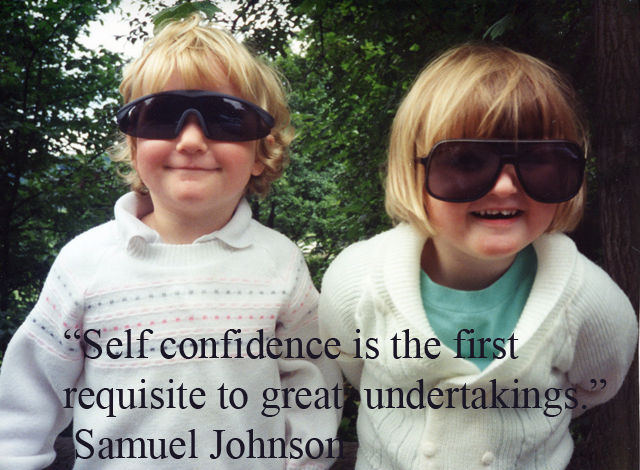
“The greatest barrier to success is the fear of failure.”
Sven Goran
Before we get started on our list, let’s be sure that we are on the same page. Confidence is not the same as arrogance! They are two totally different things. If you go through life thinking that they mean the same thing, then you are very likely to be an unhappy person with very few real friends. Arrogance is NOT a “quality” that we wish to nurture, and it won’t help you reach your goals any faster. This is the first of a two-part series.
A lack of confidence is what stops many people from getting and maintaining a tight focused on what they really want to achieve in life. That little voice in your head that keeps telling you that you that you can’t do something can be your their biggest UN-motivator. So, how to we build confidence and improve our self-esteem?”
1. Love Yourself. This will take a bit of practice and may feel strange in the beginning, but try it anyway. When you wake up, give yourself a great big hug. Do the same when it’s time for sleep. You have heard It said a million times, “How can you expect others to love you if you don’t really love yourself?” It’s true. Practice the morning and evening hugs for 2 weeks, maybe 3 weeks if you’re the stubborn type, and see how well it works.
2. Look in the mirror. Every time you pass by a mirror, look into it and flash your biggest, brightest and best smile at yourself. Again, this will feel strange at first few times, but eventually it will make you feel absolutely brilliant about yourself. Tell yourself “Looking good!” or “Wow, I love me!” or similar phrases often enough that you actually start believing it.
3. Do things that make you feel good. This can be anything from listening to music, trekking in the Andes, doing some volunteer work or even just taking a shower. Anything that gives you a positive feeling about yourself works for this one.
4. Listen to YOU. Face it. Nobody knows you better than you know yourself, no matter how many people try to tell you differently. So if your body, mind or gut are telling you something, then take notice of it, and don’t worry about what other people may have to say about it
5. Talk to YOU. In times of stress,, give yourself a time-out or a break. Wander into your own mind and have a conversation with yourself about anything at all. Tell yourself how lucky you are to be you, and give yourself credit for all of the good and positive thing you can attribute to yourself.
6. Remove negatives. If something feels like it’s dragging you down, work to get rid of it. If it’s clutter, tidy up. If it’s a friend full of negativity, explain as nicely as you can that you don’t really feel up to talking right now. If it’s your kids acting up, leave the room for a while and so on.
7. Surround yourself with positives. Surround yourself with things that bring out good feelings in you. Examples could be things such as happy, upbeat friends, a nice new picture, an old comfy blanket, candles, pictures of your family, your girlfriend, boyfriend, spouse, etc.
8. Rumors Die. Did you hear something about somebody who said something about somebody else? Drop it! Rumors are nasty, horrible things that will only bring you down. The best way to kill a rumor? Ignore it! There is an old adage that says, “those who gossip with you, will gossip about you.” Step away from the negative energy. Rumors die out eventually. Don’t let your integrity and credibility die with them.
9. Total Honesty. Be totally honest with yourself at all times. If there’s something you don’t like, admit it. If there’s something you don’t want to do “right now” and it isn’t necessary for health and safety reasons then just don’t do it until you feel like it.
The same thing applies to the positive aspects of your life. If there’s something you want to do, and it’s not hurting anyone else, then go ahead and do it. If you start feeling great about yourself for no apparent reason admit it and enjoy the feeling.
10. Responsibility. Take full ownership and responsibility for all of your own actions. Don’t shove the blame for anything over onto someone or something else. You make choices all day long. You can move toward or away from your goals with the choices you consciously make. Once you begin to take full responsibility for those choices that you have made, you learn to choose better for yourself.
Once you start to choose better, you feel better and things start falling into place. But remember that we are talking about you and your responsibilities. Don’t assume or take on someone else’s responsibilities just because you feel “you have to”.
11. Pretend. If you feel unsafe, unsure or nervous then go inside yourself and pretend you’re a hot-shot lawyer, actor, actress, singer or whatever you need to be.
Make believe you’re presenting yourself as that person would until you feel better. Trust me, you WILL feel better, and eventually have no need to be anything but yourself.
12. Keep Trying. If you are trying to do something but don’t get it right first time around, then try again, and again, and again, constantly learning from your mistakes and mis-steps until you get it right. When you finally DO get it right, you’ll feel wonderful about it.
Have a restful and productive weekend. More to come…
photo credit: http://www.flickr.com/photos/12485267@N06/4816432252/sizes/z/in/photostream/
Related articles


Heal Thyself

Healing is a matter of time, but it is sometimes
also a matter of opportunity.
Being human
From time to time, we all experience unfortunate events, unexpected situations, or traumas. Although traumas might involve physical injuries and damage, they can also be primarily emotional. If unaddressed, the results of these emotional experiences can last for years. So we want to focus on how to get healed.
Today, we are focusing on some of the emotional aspects of trauma and what you can do to expedite your recovery. Take a moment to look back at your life and see if there are any old hurts or wounds that could use your attention. You can also use this as a guide the for next time you experience an intense situation that leaves you emotionally smarting or drained for a while.
Strategies:
1. Give yourself some credit. Compliment yourself on making it through. You are still here and you’re alive. Whether your trauma involved purely emotional upheaval or physical injury as well, the fact is that you’re strong enough to have survived it.
2. Time. Give yourself some time to recuperate. You may not be completely recovered by next week. Healing from emotional trauma takes time and rest. In the evenings after work, allow yourself some time to relax.
3. Lighten up. Take it easy on yourself. Depending on what your emotional trauma has been, you may find that you are returning to work and carrying out your everyday life activities while you’re still trying to heal. Maybe you can’t finish every task you wanted to complete while at work. Remind yourself that you’re doing what you can to get better and will soon be as efficient as ever.
4. Think positively. Long known to conquer many afflictions, thinking positive thoughts will help you speed up your emotional healing. When you’re thinking troubling thoughts like, “I feel so sad today,” remind yourself, “They may be small, but I’m taking important steps each day to feel better.”
5. Do something you enjoy. Find moments in each day to do what you like to do. Even if it’s just for 30 minutes a day. Sit outdoors and watch the birds, work on the bookshelf you’re building, or check out your social media websites. Staying in touch with the things you love will speed your recovery.
6. Cry. Give yourself permission to cry. If you feel emotions building up inside you, it’s quite natural to want to release them by having a good cry. Crying will provide some relief and help you leave some of your pain behind you. Go ahead and cry.
7. Music. Listen to the music you love. Nothing brings joy to the soul in quite the same manner as music. Your prescription is: listen to music each day for at least 15 minutes. Some days you’ll find yourself extending that time a bit and maybe even singing along. Music will help you heal.
8. Pamper yourself. If ever there is a time to indulge in the creature comforts you love, it’s whenever you’re healing from trauma. On your day off, lie on the sofa and read a book. Play games all day with your kids. Take a nice long walk with your best friend.
9. Laugh. Watch situation comedies on television. Laughing is good for your emotional healing process. You have probably seen a few comedies that you find humorous and entertaining. Now is the time to ensure that you watch a few every week. This is a bit of healthy escapism.
10. Get physical. Incorporate physical movement into your day. Check in with your physician, and if they say it’s okay, engage in some physical activity each day. Go for a swim. Lift weights, or get on that dusty treadmill sitting in the corner. Physical exercise releases endorphins, the “feel good” hormones.
11. People. Surround yourself with the people you love. Play with your kids. Talk to your partner. Call your best friend. Invite your sibling over for a visit. Remind yourself of all the positive people you have in your life and take advantage of their loving care and support.
12. Get help. Recognize that a time may come when you need to seek out professional help. Allowing your emotional injuries to prevent you from living a full life is unproductive after the first few weeks or months. Instead, call a local mental health professional to help you sort through your challenging times.
Healing emotionally after a trauma takes time, patience, and effort. Try putting some of the above strategies to work for you to help process everything and reach your emotional recovery. Trust that you will be better soon and re-discover the rich, full life that’s waiting for you.
For me, singing sad songs often has a way of
healing a situation.
It gets the hurt out in the open into the light,
out of the darkness.
photo credit: http://www.flickr.com/photos/tonyarmstrong/4745609679/sizes/z/in/photostream/
Related articles


Becoming an effective entrepreneur

An entrepreneur assumes the risk and is dedicated
and committed to the success of whatever
he or she undertakes.
~ Victor Kiam
Before a doctor can diagnose a specific disease, the patient must undergo a series of examinations, laboratory tests and assessments. She must know the history of the patient and how lifestyle may have affected this person’s present health status. As the results come in, decisions can then be made about prescribing specific drugs or therapies for treatment, as well as maintenance. All of these steps should eventually contribute to the level of optimum health for the individual. If all else fails, then the process will need to be repeated.
An entrepreneur’s responsibilities work in much the same manner. The difference is that the entrepreneur sees her clients and customers as his patients, and you must determine what is needed to survive the predicament. The entrepreneur must follow certain logical steps, so as not to contribute to the downfall of their business. There are certain innate characteristics in the personality of most entrepreneurs which lead to success.
Entrepreneurship can have many definitions. Here we will use the word to indicate a person who can define and exhibit a vision of their own, take specific and metered actions to pursue that vision to the acheive their goals, and bring that vision into reality. In plainer English, it means getting your butt off of that sofa and doing something that you dream of, rather than fulfilling your life’s destiny of becoming a couch potato.
Last week, we talked about the entreprenerial mindset (see Entrepreneur? Check your mindset!). Today, let’s talk about entrepreneurial characteristics.
• Optimism. This means that you foresee things in a positive way. This does not mean that you won’t run into circumstances or obstacles that may hinder progress. This means that you remain focused on the bigger picture. You can “keep your eyes on the prize: in spite of your current situation. How assertive you are will depend on your knowledge of how to handle difficult situations.
• Creativity. Creativity is thinking outside of the proverbial box. This means that you have the ability to expad your mind beyond ordinary solutions through creative thought, research and collection of data.
• Stability. To be a successful leader, for the long haul, you must have a stable life- physically, mentally, socially and emotionally. It requires stability in the other areas of your life to be able to handle tough situations during tough times
• Charismatic. Entrepreneurs need to be able to intelligently communicate with people from different walks of life. A good entrepreneur must have the certain magic gleam in their eyes and be able to convey their ideas convincingly, yes and often charmingly.
• Risk-taker. As someone who is beginning to pursue their own dreams, you must be stern and have the guts and grit to take the big leap. You plunge out into the deep with a lot of knowledge behind you, but no one ever knows for sure if ultomately they are plunging into doom or success. If you believe in yourself and your ideas, you cannot be afraid of taking calculated risks when opportunity strikes.
• Energetic. Yu must be willing to do whatever it takes to reach the finish line. Your drive must always be at its highest level, because being an entrepreneur, especially in the beginning, means working a lot of hours. Your enthusiasm must sustain you until the next best thing or big break.
• Continual learner. Your small business or idea could turn out to be the next “big hit”, so it is vital that you stay on top of innovations within your industry of field.
It is absolutely necessary as a beginner to remain positive about your endeavors. You must be very observant of what your environment lacks or needs. You should have broad and sturdy shoulders for carrying the extra weight of responsibility. But don’t lose your focus. Always remember your “Why.” You are moving toward something that could change your whole life.
- Go against convention.
- Think big.
- Act.
- Make your business dreams come true.
Thoughts?
photo credit: http://www.flickr.com/photos/grahamking/3918610996/sizes/z/in/photostream/
Detours…

Happy Birthday! (and a change)

“It takes a long time to grow young.”
Pablo Picasso
As I have had more opportunities recently to write other places, commitments to clas, etc. I am making a change in the posting schedule for the blog. Beginning this week, we will change the schedule to post on Monday, Wednesday and Friday. The weekend affirmations will still be posted. And, yes, it is the b’day. 🙂
Namasthe.
photo credit: http://www.flickr.com/photos/tonyjcase/4236125477/sizes/z/in/photostream/
Do you…

Entrepreneur? Check your mindset!
“Changing the game is a mindset.”
~ Robert Rodriguez
Many small business owners and enterprising people started out as employees. They worked for someone else. The issue is that if you have been an employee for many years, it may be difficult to shake of the bonds of the employee mentality.
What does this mean?
If you possess an employee mentality, you’re more likely to look to other people to tell you what to do. You may find it difficult to take on the responsibility for the success and failure of your endeavor. You see, as an employee, you don’t really have a lot of input into how the business is run. Your job is to work hard to prove your value so that you can stay employable and employed.
Which one Are You?
If you are ready to make the switch, or have just started thinking about running your own shop, then you must begin to think much differently. Essentially the buck stops, and begins, with you. You are responsible for the success or the failure of your endeavor. And you are the one who must make all of the major decisions, including who to designate smaller decisions to!
Here are a couple of questions to check you own mindset:
Do you limit your tasks and responsibilities to a small portion of what may be required for the business you are in to flourish?
Do you base your lifestyle and purchases on your revenue?
If a monetary setback occurs, would you feel uncomfortable shrinking your budget to adapt to the reduction in revenue?
Do you constantly seek outside advice to make even daily decisions?
What your answers may reveal about you
If you responded “yes” to most of these questions, chances are you have an employee mentality, and that’s fine. It is important to know yourself and be comfortable with this knowledge. But, here is why those with an entrepreneur mentality would answer “no” much more often:
Do you confine your tasks/responsibilities?
Entrepreneurs understand that occasionally they have to do things in their business that are “higher” or “below” their skill level. Their mental attitude is if it has to get accomplished, get it accomplished and they are not adverse to rolling up their sleeves and getting dirty.
Do you base your lifestyle on your revenue?
Entrepreneurs will seek to develop their business, enlarge their line of products and broaden their services when monetary setbacks happen. They don’t let themselves get to be or remain a victim of their fiscal condition.
If a money setback happens, do you shrink your budget to accommodate the reduction in revenue?
Entrepreneurs know to pay themselves first. They are focused on bringing in the money that supports the lifestyle they want and invest the rest into their business. Having said that, they are likewise very cognizant of and accept the fleeting sacrifices that they may need to make in order to achieve their goal.
Do you constantly seek outside advice to make even daily decisions?
Entrepreneurs handle their time and take responsibility for their actions. While they might seek out mentors to help guide them to expanded growth, they are in control of their day-to-day actions and don’t need someone else to tell them what to accomplish or prompt them to accomplish it.
Other differences:
Monday mentality
Employees fear or dread Monday; or, whatever day is the beginning of their work week is.
Entrepreneurs are not bolted into a work week. They approach each day as a different chance to go after their dreams.
“It’s not my problem” mentality
Many employees take this view of everything on the job by whether it really is their problem or not.
Entrepreneurs view everything as part of their duty as they have ownership of everything that happens in the name of their business.
“T. G. I. F.” “Thank Goodness / God it’s Friday” mentality
Employees spend time looking forward to their off days.
Entrepreneurs are usually seeking ways to extend and expand their business. Even when they’re not “on the clock” they are considering ways to stretch and improve their entrepreneurial talents. They look forward to each day! It’s a new opportunity.
“When am I going to receive a raise?” mentality
Many employees think that raises ought to come according to the calendar, instead of according to their work.
Entrepreneurs seldom give much thought to when they will receive an increase. They realize that the more they work towards helping other people the greater their reward will be.
“Oh no, what now?” mentality
Employees usually head into meetings with an “oh no” mentality.
Entrepreneurs enter meetings with a mastermind mentality. They realize that excellent ideas come out of these meetings.
These are obviously, generalizations. Over the next few weeks, we will discuss the entrepreneurial mindset further.
However, the point is that people who are or who aspire to be entrepreneurs see the world, move through the world and think about the world differently. There are many more mindset dissimilarities that we could compare. You have probably thought of some while you were reading through these…
What would you add to this list?
Photo credit: http://www.flickr.com/photos/grahamking/3918610996/sizes/z/in/photostream/
5 Tips for managing your stress

“If you ask what is the single most important key to longevity,
I would have to say it is avoiding worry, stress and tension.
And if you didn’t ask me, I’d still have to say it.”
~ George F. Burns
Not all stress is bad
Stress can happen at the beginning of a change, or cause you to make mauch needed changes. Stress can aid you in focusing on the tasks at hand. And, in some cases, stress can even save your life. However, a build up of stress can result in major risks. Do not let stress accumulate otherwise the result can be fatal. Here are a few quick tips and steps in managing your stress.
Identify the tressors
The first thing you need to do is determine and understand the cause of your stress or the stressors. By recognizing the stressors, you can put each of them in place and deal with them one by one.
Breathing And Relaxing
Oxygen is very important to the body. Taking a deep breath adds oxygen to the system, which can help you relax. Learning how to breathe can help you maintain your self-control in a stressful situation.
You can start by taking a deep breath. Stand up and stretch. Standing and stretching helps your ribcage expand, which gives you more room to fill your lungs with more oxygen. Always remember that the opposite of stress is relaxation. Take a short walk, get a glass a glass of water and do something that can change your focus. Try smiling and take a short moment focusing on something other than your immediate problem. By the time you get back to your problem, it probably won’t seem nearly as undefeatable.
There are other several ways to help you manage your stress. If you are into books, sometimes making the time to read one of your favorite books can help by putting the problem out from your mind for a short time. Taking a warm bath and watching your favorite show on TV can also help you.
Enjoy The Good Things Of Life And Be Positive
Sometimes you can forget to enjoy the good things of life if you let stressful events build up. Remember that life offers many other things outside of work. Reserve some of your time to actually recognize and enjoy the good things that you already have in your life.
Every situation has both pros and cons; make a list. List them both, put the list away and take a second look tomorrow. Sleeping on almost any situation can often alter your perceptions or thoughts about the disadvantages to advantages.
Everything in this world exists in a balance. Negative can never occur without the positive. Learn to find good in your stressful situation and try to change every negative events into positive.
Know Yourself And Your Limitations
To manage stress effectively, it is very important to know yourself and your limitations. Sometimes, learning to say “No” can spare you from stress build up. If you are in a working environment, do not just accept work loads if you think you cannot manage them easily. By recognizing your limitations, you can avoid situations that can usually lead to the piling of work.
Sometimes, situations are beyond your full control. Always be as positive as you can, and refrain from blaming yourself. If you continuously beat yourself up with guilt, not only will you not be able to manage the stress, but you may worsen the situation.
Get help
A major stress management tip is asking for help from friends, family or workmates. You are never alone and there are always people around you willing to lend a helping hand. There are also professionals available, as well as self-help books that can aid you in relieving stress by giving you useful advice.
By managing and planning your time and prioritizing the most important things first can prevent stress from building up. Always remember that the keyword in better stress management is Relaxation.
What do you do to relieve stress in the short term?
Related posts
Know Your Stress, and Defeat It
photo credit: http://www.flickr.com/photos/redbettyblack/10419330/sizes/z/in/photostream/
Listen Better. Ace Your Next Job Interview.

“There is no certainty, only opportunity.”
V for Vendetta (2005)
Listen
Active listening skills are a subtle but effective way to perform better in all areas of life, but especially on job interviews. Half of all communication is listening but few of us get any training on how to do it well. Fortunately, listening well is relatively simple and will become automatic once you learn and practice the basic skills involved. So, lets talks about some techniques that will help you acquire more knowledge and make a better impression on your perspective employer.
How to use active listening for your job interview:
1. Recognize your limitations. Many studies confirm that we only take in about half of what we hear and we forget half of that by the next day. Becoming more attentive, takes some deliberate effort.
2. Relax your mind. Most people feel anxious about applying for a new job. Take the time to quiet your mind and reduce distracting thoughts. Meditate, get a massage or listen to instrumental music, whatever works best for you.
3. Stay alert. Prevent fatigue from sabotaging your interview. Get a good night’s sleep and squeeze in a little aerobic exercise beforehand. Sit up straight and dress in layers. Being chilly makes concentration difficult, in fact, it makes most people sleepy.
4. Show your enthusiasm. Successful people often enjoy talking about their work, especially when they have an appreciative audience. Make eye contact and lean forward. toward your interviewer. Let your positive feeling shine through when you describe your past accomplishments and how they relate to the position you are seeking.
5. Position yourself as a good fit. Use the information your interviewer provides to home in on the type of candidate they are looking for. Explain how your background and skills enable you to contribute and to become a valued and valuable team member.
6. Take notes. People listen faster than they speak. Take advantage of that gap to take notes and collect your thoughts. Jot down keywords and main themes rather than trying to record every word.
7. Keep an open mind. It pays to be flexible. Remain neutral to avoid rejecting a new viewpoint or job opportunity before you have a chance to consider it from all angles.
8. Put yourself into the interviewer shoes. Your interviewer may feel a little uncomfortable too. Empathize with their responsibility in finding the right person for the job.
9. Restate key points. Summarize and paraphrase the most important messages. This will help reinforce their thoughts in your mind and show your interviewer that you are paying attention and are on the same page.
10. Seek clarification. Avoid misunderstandings by clarifying anything that is unclear to you. A good employer will appreciate your efforts to fully comprehend their expectations.
11. Ask thoughtful questions. Use open ended questions to illicit more information. Incisiveness also helps show that you are a strong candidate.
12. Meeting the staff:
- Get to know your supervisor. Your manager will likely play a big role in your job satisfaction. Talk about the daily routine and the responsibilities. Learn about their work style and how they establish priorities.
- Pick up valuable information from your co-workers. Try to meet some of your future associates. They can clue you in on the work environment and organizational culture. Plus, it’s usually a very good sign if employees are involved in the hiring process.
- Learn about the big picture from leadership. You may also get the opportunity to speak with some of the organizations senior executives. Even if the time is brief, use those meetings to help get a better sense of the organization’s strategic plans and future direction.
Go to your next job interview better prepared to listen. The session will probably be more productive for both you and the people you interview with. And even if you don’t get this job, if you’ve kept your ears open, you may have positioned yourself for a different one. Active listening is one way to open up new career opportunities and build a better future for yourself.
Thoughts? What would you add to this list of how to make your best impression during a job interview?
Related Posts
1. Just Look
2. 5 Ways to change your perspective
3. Be Flexible: Increase Your Happiness
4. Priorities: Setting and Ranking Them
photo credit: http://www.flickr.com/photos/highwaysagency/5997564389/sizes/z/in/photostream/